Introduction
Investing in a robotic laser welding system is not just about replacing manual welding with automation; it is about improving production economics while maintaining consistent weld quality. However, the actual return depends on equipment costs, labor savings, production output, product yield, and equipment utilization. This buyer's guide explains how to evaluate these factors, select the right configuration, and calculate the payback period before committing to an automation investment.
Is Your Production Ready for Robotic Laser Welding
A robotic laser welding system delivers the best return when your production volume, welding requirements, and labor challenges justify automation.
1. Welding Materials & Joint Requirements
Evaluate whether your stainless steel, carbon steel, aluminum, or other workpieces are suitable for laser welding based on material thickness, reflectivity, joint design, and gap tolerance.
2. Weld Consistency & Post-Weld Work
Automation is worth evaluating when thin-sheet distortion, inconsistent weld appearance, or extensive grinding and polishing increase production costs and rework.
3. Production Volume & Labor Availability
Stable order volumes, shortages of skilled welders, rising labor costs, and delivery bottlenecks make automated welding more financially attractive.
What Does a Robotic Laser Welding System Really Cost
The actual investment includes more than the robot and laser source, so buyers should evaluate the complete system before comparing supplier quotations.
Robot & Laser Equipment
Include the robotic arm, laser source, controller, welding head, wire-feeding equipment, and dedicated software in the initial equipment budget.
Fixtures & Safety Equipment
Account for workholding fixtures, positioners, laser safety enclosures, protective equipment, and other auxiliary components required for production.
Installation & Integration
Budget for transportation, installation, system commissioning, welding program development, operator training, and process validation.
Workshop Infrastructure
Check electrical capacity, floor space, cooling requirements, fume extraction, and other site conditions to identify potential facility modification costs.
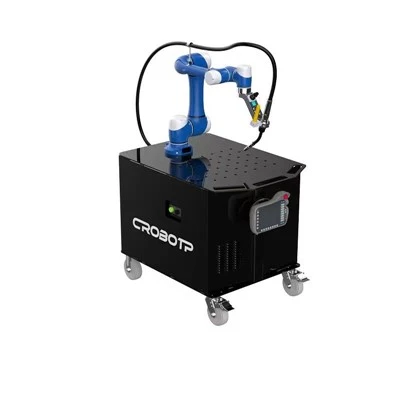
An integrated system can reduce some of these expenses by simplifying installation and programming. For example, a compact control cabinet integrated into the laser unit, single-phase 220V power input, pre-installed welding software, and a vertical teach pendant can reduce workshop preparation and programming requirements, although actual savings depend on the production site and application.
How Does a Robotic Laser Welding System Generate ROI
A reliable ROI assessment should measure five operational factors rather than relying on welding speed alone.
- Labor Cost Savings: Compare the annual cost of skilled manual welders with the operating labor required for automated workstations, taking into account whether one operator can supervise multiple systems without affecting production.
- Production Output: Measure changes in cycle time, shift output, and productive operating hours, while including savings from reduced grinding, polishing, and rework.
- Weld Quality & Product Yield: Evaluate how ±0.02mm robot repeatability and dual-control wire feeding for 0.6–2.0mm wires contribute to consistent weld paths, fewer defects, and lower rework costs.
- Equipment Utilization: Consider a dual-station positioner that allows operators to load and unload one workpiece while the robot welds another, reducing idle time between production cycles.
- Maintenance & Production Losses: Include laser source maintenance, protective lens replacement, consumables, electricity, and downtime, while assessing whether built-in UPS protection with a transfer time of ≤5ms can prevent workpiece losses during unexpected power interruptions.
The following table provides a practical framework for comparing production costs before and after automation.
|
Evaluation Metric |
Before Automation |
After Automation |
|
Labor Cost |
Annual manual welding labor |
Annual automation operating labor |
|
Production Output |
Units produced per shift |
Units produced per shift |
|
Rework Rate |
Existing defect and rework rate |
Actual automated production rate |
|
Equipment Utilization |
Productive operating hours |
Productive operating hours |
|
Maintenance Cost |
Annual maintenance and consumables |
Annual maintenance and consumables |
The financial benefits should be verified through actual production trials rather than assumed from equipment specifications. For example, a reported 50% efficiency improvement from positioner synchronization should be treated as an application-specific reference, not a guaranteed result for every welding line.
Which Laser Welding Robot Configuration Fits Your Production
The right configuration depends on workpiece dimensions, welding complexity, production volume, and available floor space.
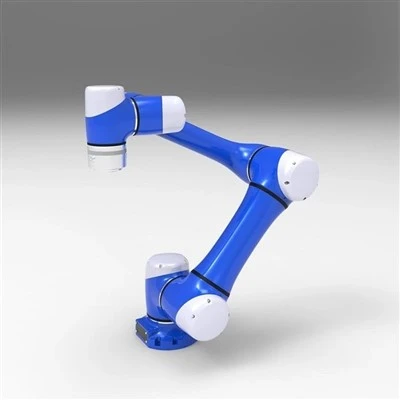
Compact Laser Welding Robot: For small workshops and space-constrained production lines, a compact model with a 1,510mm reach and 12kg payload can provide a practical working envelope without requiring a large installation area.
Laser Hybrid Welding Robot: For thicker plates, larger joint gaps, and demanding material combinations, a hybrid system combines laser and arc welding processes, with a 20kg payload supporting heavier welding equipment.
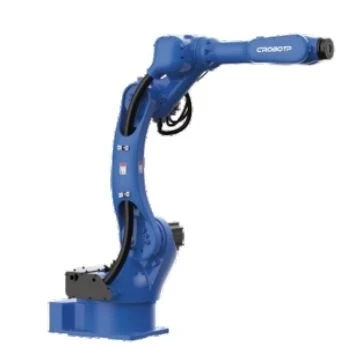
Laser Welding Robot With Linear Track: For oversized structures, long seams, and applications such as construction machinery or large pipes, a linear track extends the robot's working range beyond its standard reach.
Dual-Robot Laser Welding System: For high-volume production and suitable symmetrical workpieces, two coordinated robots can weld different sections simultaneously, potentially reducing cycle time and increasing workstation output.
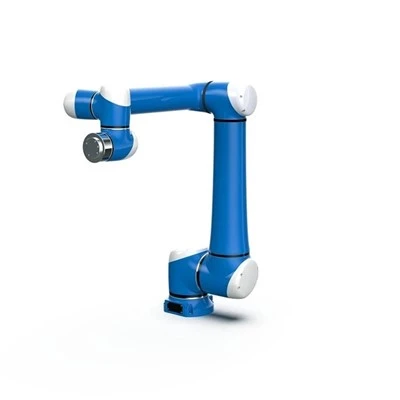
Collaborative Laser Welding Robot: For small-batch, high-mix production, a collaborative configuration offers flexible deployment and easier workstation rearrangement, subject to appropriate laser safety measures.
Before selecting a model, verify the actual welding envelope, payload after mounting the welding equipment, fixture accessibility, and cycle time using representative workpieces. A higher robot payload or a second robot does not automatically produce a better return if the application cannot use the additional capacity.
How to Calculate the Payback Period of a Robotic Laser Welding System
Once the total investment and annual operating savings are established, buyers can estimate how quickly automation will recover its initial cost.
Initial Investment
Add the robot, laser source, fixtures, positioners, safety equipment, transportation, installation, commissioning, and training expenses to determine the total initial investment.
Annual Labor Savings
Calculate the difference between existing manual welding labor costs and the annual labor costs required to operate the automated workstation.
Annual Production Savings
Include measurable reductions in grinding, polishing, rework, rejected workpieces, and other production expenses, as well as additional contribution from output that can actually be sold.
Additional Operating Costs
Deduct electricity, protective lenses, consumables, maintenance, and other recurring expenses introduced by automation.
Use the following formulas in your equipment investment proposal:

For example, if a complete system costs $120,000 and generates $90,000 in verified annual net savings, its estimated payback period is 1.33 years, or approximately 16 months. A 12–18-month payback target can be used as an internal investment scenario, but actual results depend on equipment utilization, local labor rates, production demand, and operating expenses.
What Should You Check Before Choosing a Laser Welding System Supplier
A competitive quotation is only one part of a successful automation investment; the supplier must also demonstrate engineering, quality, and after-sales capabilities.
- 1. R&D & Engineering Capability: Check whether the manufacturer develops robot control systems, motion technologies, and welding automation solutions rather than simply assembling third-party equipment.
- 2. Core Component & Control System Quality: Confirm the specifications, origins, compatibility, and technical support arrangements for the robot controller, servo motors, laser source, and wire-feeding system.
- 3. Factory Testing & Acceptance: Request actual workpiece welding trials and verify repeatability, weld appearance, penetration, cycle time, and continuous operating performance before shipment.
- 4. After-Sales Service & Technical Support: Confirm installation and commissioning support, operator training, spare parts availability, remote diagnostics, warranty coverage, and local service response times.
When evaluating CRP, buyers can consider its 40% R&D workforce, more than 400 authorized intellectual properties, and integrated robot development capabilities as indicators of its engineering resources. Its 60+ technical personnel, 24/7 technical support, Malaysia subsidiary, and service network across Europe, Asia, and Latin America also provide relevant support for overseas installation, maintenance, and automation projects.


Conclusion
A robotic laser welding system can deliver substantial long-term savings when its configuration matches actual production requirements and its operating costs are properly evaluated. Buyers should compare the complete investment, measurable productivity gains, product yield, equipment utilization, and supplier support before making a purchasing decision. Submit your workpiece drawings, material specifications, target daily output, and required welding cycle time to request a customized configuration proposal and quotation.
Get Your Robotic Laser Welding System
FAQ
Q: How Much Does a Robotic Laser Welding System Cost?
A: The total cost depends on robot specifications, laser power, fixtures, positioners, safety equipment, software, and installation requirements, so buyers should compare complete system quotations rather than robot prices alone.
Q: Is Robotic Laser Welding More Cost-Effective Than Manual Welding?
A: Robotic laser welding can reduce labor dependence, improve weld consistency, and lower post-weld processing costs, particularly in production environments with stable order volumes and repetitive welding tasks.
Q: How Can I Get a Quote for a Robotic Laser Welding System?
A: Prepare your workpiece drawings, material type and thickness, joint requirements, target daily production volume, and expected welding cycle time to receive a configuration recommendation and project quotation.