Product Overview
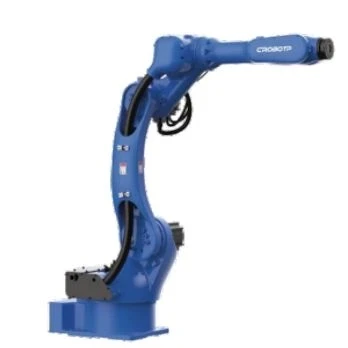
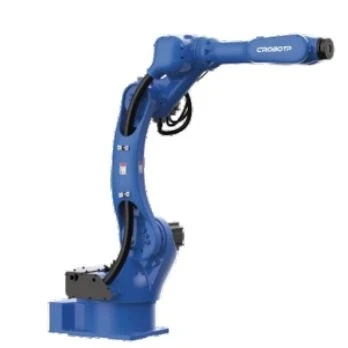
The Precision Parts Laser Welding Robot is designed for automated laser welding of metal components with defined joint locations, detailed contours, and repeatable production requirements. Its six-axis articulated structure allows flexible positioning of the welding head, helping the robot reach accessible joints from different angles.
For manufacturers producing precision components in batches, programmable robot movement helps reproduce established weld paths. Combined with suitable fixtures and laser process parameters, localized laser energy can help limit heat transfer to surrounding material. Actual weld quality and dimensional results depend on the workpiece, joint design, and welding process.
Technical Specifications
|
Parameter |
Specification |
|
Robot Type |
Precision Parts Laser Welding Robot |
|
Maximum Payload |
12 kg |
|
Maximum Reach |
1,510 mm |
|
Number of Axes |
6 |
|
Repeatability |
±0.02 mm |
|
Welding Process |
Laser Welding |
|
Laser Welding Functions |
Laser power control, soft start/stop, and pre-attenuation |
|
Additional Process Functions |
Supported wire-feeding control |
Key Features for Precision Part Welding
Programmable Paths and Flexible Joint Access
Precision components can have short seams, angled edges, curved contours, or joints that are difficult to approach from a single direction. Six-axis movement allows the robot to adjust the welding head's position and orientation along a programmed path, provided the joint lies within the usable working envelope.
When evaluating reachability, consider the workpiece dimensions, fixture geometry, welding-head clearance, cables, and required approach angles. These factors determine whether the robot can access the intended seam without interference.
Localized Heat Input for Dimension-Sensitive Parts
Heat can affect the dimensions, surface appearance, and assembly fit of precision components. Laser welding concentrates energy around the joint and can help limit the thermal impact on surrounding material when suitable process parameters are used.
The result depends on material type and thickness, joint geometry, clamping, laser settings, and welding speed. A robot's positioning specifications alone cannot establish the amount of distortion or the final weld quality.
Repeatable Robot Movement for Batch Production
Once a weld path has been programmed and validated, the robot can repeat the same movement routine across workpieces presented in consistent positions. Fixtures help maintain part orientation and joint alignment, reducing variation caused by inconsistent loading or locating conditions.
For production involving several part variants, the required programs, fixture changes, and changeover arrangements should be considered as part of the overall workcell plan.
Laser Process Control Functions
CRP's laser welding robot range includes laser power control, soft start/stop, and pre-attenuation functions. These can support the programmed welding sequence by coordinating laser operation with the robot's movement.
Wire-feeding control is relevant when the selected process requires filler material. It is not necessary for every laser welding task. The required laser equipment and peripheral devices depend on the intended application and workcell scope.
Applications
The Precision Parts Laser Welding Robot can be considered for automated joining of metal components with defined weld locations, detailed geometries, or recurring production requirements.
- Electronic and electrical parts: Selected metal housings, connectors, and structural components requiring controlled weld placement.
- Sensor and instrument components: Small metal parts with specific seam locations or limited access.
- Automotive metal components: Brackets and compact assemblies with recurring joint geometries.
- Precision metal assemblies: Components requiring short, angled, curved, or multi-sided weld paths.
- Selected stainless steel parts: Enclosures, fittings, and other metal components where the material and joint design are suitable for laser welding.
Application Planning and Robot Performance
Choosing a robot for precision part welding involves more than comparing payload, reach, and repeatability. Workpiece geometry, joint location, fixture layout, and the required welding sequence all influence robot selection and workcell planning.
Application-Based Robot Selection
Part drawings, material information, joint locations, and fixture dimensions help define the required working envelope and motion paths. CRP's robot development and control-system capabilities support the selection of robotic solutions around different automation requirements.
For projects involving multiple part designs, the assessment should also account for program changes, fixture arrangements, and access to each required weld location.
Robot Performance Inspection
CRP's production inspection and pre-shipment testing include checks of repeat positioning accuracy and load stability. These checks help assess the robot's movement and load performance before delivery.
Robot performance testing and welding-process validation serve different purposes. Final weld acceptance still depends on the selected laser equipment, workpiece positioning, materials, joint preparation, and established process parameters.

FAQ
Q: What information helps determine whether a part is suitable for robotic laser welding?
A: Part drawings or 3D files, material grades, thicknesses, joint geometry, required weld quality, and expected production volume provide a useful starting point. These details help assess joint access, positioning requirements, and the likely scope of the welding workcell.
Q: Can the same robot handle different part designs?
A: Potentially, if each part fits the robot's working envelope and payload limits and can be presented in a suitable position. Different geometries may require separate programs, interchangeable fixtures, or adjustments to the workcell. The number of variants and their differences influence changeover requirements.
Q: How should weld quality be assessed for precision components?
A: Acceptance criteria should reflect the component's function and applicable product requirements. Depending on the application, they may include weld appearance, seam continuity, dimensional tolerances, joint strength, or specified inspection methods. Robot repeatability alone is not sufficient to establish these outcomes.
Q: Does a six-axis robot eliminate the need for additional positioning equipment?
A: No. Six-axis movement provides flexibility in the welding head's position and orientation, but some workpieces may still require dedicated fixtures, rotary positioners, or other handling equipment. The need depends on part geometry, joint accessibility, loading method, and the required production sequence.
Hot Tags: precision parts laser welding robot, China precision parts laser welding robot manufacturers, suppliers, factory