Introduction
Choosing the right collaborative robot (cobot) requires more than matching a robot`s maximum payload to the weight of a workpiece. Reach, working envelope, end-of-arm tooling, repeatability, cycle time, safety requirements, and equipment integration all influence whether a robot can perform reliably in a real production environment. This guide provides a practical selection framework to help manufacturers, system integrators, and procurement managers identify suitable robot configurations before committing to an automation project.
Define the Task Before Comparing Robot Specifications
Start by defining the complete production task, because the required movements, workpiece characteristics, and operating conditions determine which robot specifications matter most.
- Identify the Application: Determine whether the robot will handle machine tending, pick-and-place, assembly, welding, dispensing, or inspection, as each task places different demands on motion, tooling, and positioning.
- Specify Workpiece Requirements: Document the workpiece`s weight, dimensions, shape, material, and positioning variability to establish realistic handling and process requirements.
- Map the Motion Sequence: Distinguish between point-to-point movements for material transfer and continuous-path movements for welding or dispensing, which require consistent motion along a defined trajectory.
- Define Production Conditions: Record the target cycle time, operating hours, product changeover frequency, and opportunities for human-robot collaboration to establish practical performance requirements.
Match Payload & Reach to the Actual Working Envelope
Payload and reach must be evaluated together, with the complete tool assembly and every required robot position included in the assessment.
Calculate the Complete End-of-Arm Load
Include All Tooling Weights
Calculate the total end-of-arm load by adding the workpiece, gripper, welding torch, sensors, quick-change device, and other components attached to the robot flange.
Check Center of Gravity & Inertia
Verify the load`s center of gravity, inertia, and wrist torque against the manufacturer`s specifications, because a long or offset tool can exceed joint limits even when its total weight remains below the rated payload.
Validate the Intended Motion
Check the applicable payload charts and motion conditions to confirm that the selected robot can handle the complete assembly throughout the required operating cycle.
Verify Reach Across the Entire Workspace
Assess 3-Dimensional Coverage
Confirm that the robot can reach every pickup point, fixture, machine opening, and placement position without relying solely on its advertised maximum reach.
Check Joint Limits & Singularities
Evaluate wrist orientation, joint interference, and singular configurations that could restrict movement or make the intended trajectory impractical.
Compare Suitable Robot Configurations
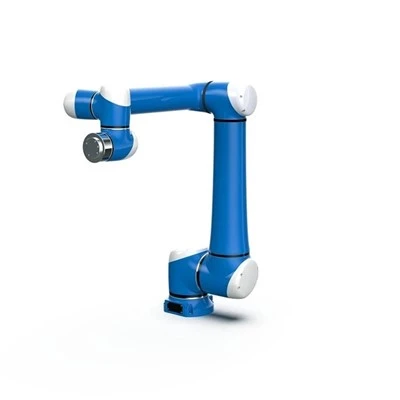
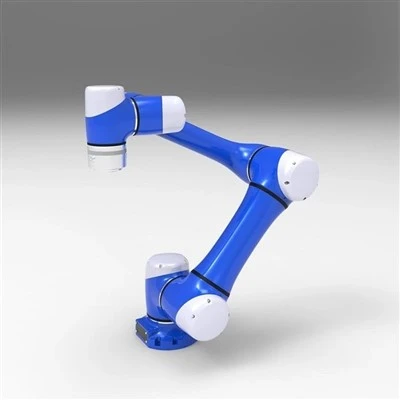
For example, the CRP-RC09-05 has a maximum payload of 5 kg and a maximum reach of 906 mm, while the CRP-RC13-10 has a maximum payload of 10 kg and a maximum reach of 1,320 mm; these specifications support preliminary screening but do not establish suitability without application-specific verification.
Evaluate Repeatability, Accuracy & Motion Requirements
The required positioning performance depends on the manufacturing process, so buyers should distinguish between repeatability, absolute accuracy, and the quality of the finished operation.
Match Repeatability to Process Tolerance
Select a robot with repeatability appropriate to the allowable positioning variation, particularly for repetitive assembly, component placement, and inspection tasks.
Account for System-Level Accuracy
Consider fixture tolerances, workpiece positioning, tool offsets, calibration, and vision-system performance because robot repeatability alone does not determine final process accuracy.
Evaluate Continuous-Path Performance
For welding, dispensing, and grinding, assess trajectory consistency, tool orientation, motion smoothness, and process control rather than relying exclusively on a single positioning specification.
Confirm Additional Control Requirements
Determine whether the application requires force control, vision guidance, or other feedback functions, and verify that the selected robot configuration supports them.
Check Cycle Time Under Real Production Conditions
A robot`s maximum speed does not necessarily translate into the required production output, because the complete operation includes movement, processing, and equipment interaction.

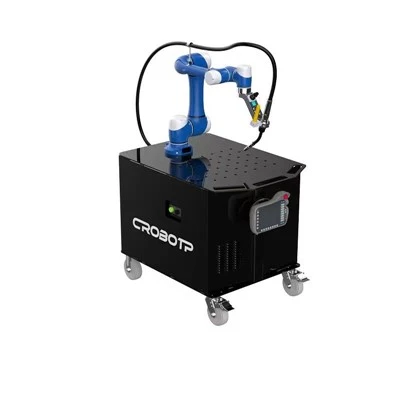
Collaborative Welding
Include robot travel, acceleration and deceleration, gripping, releasing, positioning, machine handshakes, inspection, and waiting time when estimating throughput.
Account for Actual Operating Conditions
Evaluate the effects of payload, reach, motion profiles, precision requirements, and safety restrictions on achievable cycle time.
Test the Complete Sequence
Use representative workpieces, production tooling, and realistic operating conditions to validate cycle time before finalizing the purchase.
Identify System-Level Bottlenecks
If the target cannot be achieved, review motion paths, fixture placement, parallel operations, and upstream or downstream equipment before choosing a faster robot.
Assess Collaborative Safety & Application Environment
Collaborative robot selection requires an application-level risk assessment because the robot arm is only one component of the complete working system.

Evaluate Human Interaction
Determine where operators may enter the working area, whether contact is foreseeable, and what operating speeds or protective measures are appropriate.
Identify Process-Specific Hazards
Consider sharp workpieces, hot components, welding arcs, sparks, pinch points, and other hazards introduced by the end effector or surrounding equipment.
Verify Applicable Safety Requirements
Identify the standards and regulations relevant to the application and destination market, then confirm the required risk reduction and validation measures.
Determine Necessary Protective Equipment
Depending on the assessment, the installation may require safety scanners, light curtains, physical separation, restricted operating zones, or additional safeguards even when a collaborative robot is used.
Confirm Integration, Tooling & Changeover Requirements
The selected robot must integrate with the existing production environment and support the operational changes expected throughout its service life.
Verify Communication & Equipment Interfaces
Confirm compatibility with the plant`s PLC, conveyors, machine controllers, vision systems, and required communication protocols before approving the system design.
Check Installation & Tooling Requirements
Account for mounting structures, grippers, cable routing, power supplies, available floor space, and access for maintenance.
Assess Programming & Changeover
fEvaluate teaching methods, program adjustment, operator training, and the time required to switch between workpiece types or production variants.
Clarify Integration Responsibilities
Agree on commissioning scope, interface specifications, acceptance criteria, and troubleshooting responsibilities with the robot supplier and system integrator.
Match the Robot Configuration to Your Application
Different applications require different selection priorities, so buyers should use the same evaluation framework while adjusting the weighting of each technical factor.
Welding & Continuous-Path Tasks
Prioritize trajectory consistency, torch weight and geometry, access to weld joints, process control, and integration with welding equipment; a coordinated welding package can simplify deployment by combining the robot, welding torch, mobile cart, and power source where supported.
Machine Tending & Material Handling
Prioritize machine access, complete payload, gripper design, loading and unloading positions, equipment communication, and cycle time to ensure that the robot can complete the full handling sequence.
Assembly & Inspection
Prioritize repeatability, fixture accuracy, sensor or vision integration, tool compatibility, and process tolerances to maintain consistent results across production batches.
Compare Total Project Cost & Supplier Support
Procurement managers should compare the cost of a complete, operational automation system rather than evaluating robot purchase prices in isolation.
- Calculate the Complete Project Budget: Include the robot, end-of-arm tooling, fixtures, vision equipment, safety devices, integration, commissioning, training, and maintenance.
- Evaluate the Expected Return: Estimate productivity improvements, labor allocation, changeover costs, downtime risks, and expected equipment utilization using realistic production data rather than assuming a universal payback period.
- Assess Technical Support: Compare the supplier`s application engineering, commissioning assistance, spare-parts availability, and ongoing troubleshooting capabilities to understand the support available after installation.
CRP draws on 20+ years of industrial robotics experience and a research and development team representing approximately 40% of its workforce, providing relevant technical resources for collaborative robot selection and application engineering. Buyers should confirm the available commissioning, integration, and after-sales support arrangements for their destination market and specific project before placing an order.
Conclusion
Choosing the right collaborative robot requires a systematic assessment of the production task, complete end-of-arm load, working envelope, motion performance, cycle time, safety, and integration requirements. Before committing to a configuration, manufacturers and system integrators should validate the proposed solution using representative workpieces, actual tooling, and the intended production sequence. Contact CRP to discuss your application requirements, including workpiece dimensions, total tool and payload weight, required reach, target cycle time, and integration needs, and identify a suitable collaborative robot configuration for your project.
Contact Us for Your Cobot Selection