Introduction
A collaborative robot may meet its rated payload and reach requirements yet still experience premature wear, unexpected downtime, or inconsistent performance if its operating conditions and maintenance requirements are not properly managed. For procurement managers and maintenance engineers, understanding collaborative robot service life means evaluating the entire system, from transmission and servo components to cycle time, environmental exposure, safety, and integration quality. This guide explains the main factors that influence long-term reliability and provides practical criteria for selecting, operating, and maintaining collaborative robots with lower lifecycle risk.
How Payload, Reach, and Cycle Time Affect Robot Service Life
The robot`s mechanical workload depends on how payload, reach, motion profiles, and production frequency interact under actual operating conditions.

Payload & Load Inertia
The robot must handle the combined weight of the workpiece, gripper, and other end-of-arm equipment within the manufacturer`s payload, center-of-gravity, and inertia limits, because excessive loading can increase joint stress and accelerate wear.
01
Reach & Working Envelope
Integrators should verify the complete working envelope and planned trajectories, since joint configurations, acceleration demands, and proximity to singularities can affect motion performance and mechanical loading.
02
Cycle Time & Duty Cycle
Frequent starts, stops, and high accelerations can increase servo and joint thermal loads, while continuous operation makes correct sizing, cooling, and lubrication particularly important.
03
Application-Based Sizing
Procurement teams should ask suppliers to validate the actual payload, reach, tool configuration, trajectory, and required cycle time rather than selecting a robot solely by its maximum payload or reach.
04
Transmission & Servo Systems: Where Reliability Can Degrade
Transmission and servo components directly influence motion accuracy, repeatability, and the ability to maintain stable performance throughout the robot`s service life.
Transmission System Wear
Gear reducers, bearings, seals, and lubrication can deteriorate over time, while abnormal noise, increasing backlash, vibration, or positioning changes may indicate a developing mechanical problem.
Servo System Stability
Servo motors, drives, encoders, and brakes must operate within their specified electrical, thermal, and mechanical limits to maintain controlled movement and consistent positioning.
Early Signs of Performance Degradation
Engineers should investigate rising temperatures, repeated alarms, longer cycle times, unusual vibration, and increasing positioning errors before these symptoms develop into major failures.
Maintenance-Based Diagnosis
Technicians should compare observed symptoms with manufacturer diagnostic procedures and historical operating data rather than replacing a reducer, motor, or encoder based on a single alarm.
Operating Environment & Maintenance Conditions
The surrounding production environment and the quality of routine maintenance can significantly affect component deterioration and unexpected downtime.
Dust, Moisture & Process Contaminants
Metal particles, cutting fluids, welding spatter, and unsuitable cleaning agents can damage exposed components, compromise seals, or affect electrical connections if the robot is not appropriately protected.
Temperature & Humidity
Operating outside the manufacturer`s specified environmental limits can impair heat dissipation, lubrication, insulation performance, and electronic component reliability.
Protection Ratings
Buyers should select an appropriate IP rating based on actual dust, liquid exposure, and cleaning practices instead of assuming that IP67 is always preferable to IP54 for every application.
Routine Maintenance
Maintenance teams should follow the manufacturer`s instructions for lubrication, fastener inspection, cable checks, cleaning, and component replacement, adjusting inspection frequency to the application`s operating conditions where permitted.
Safety & Integration: Reliability Beyond the Robot Arm
A collaborative robot`s reliability depends not only on its mechanical design but also on how safely and consistently the complete application operates.
Robot Safety vs. Application Safety
A robot`s collaborative functions do not automatically make every deployment safe without guarding, because the end effector, workpiece edges, crushing points, speed, and human interaction can introduce additional hazards.
Understanding the Safety Standards
ISO 10218-1:2025 addresses industrial robot safety, while ISO 10218-2:2025 covers the safety of robot applications and robot cells, including integration, commissioning, operation, and maintenance.
Integration & Communication Reliability
Integrators should verify compatibility among the robot controller, PLC, gripper, vision system, and industrial communication interfaces, as configuration errors and poorly managed interfaces can cause faults and production interruptions.
Risk Assessment & Fault Recovery
Buyers should clarify the responsibilities of the robot supplier and system integrator and request application-specific risk assessments, safety validation records, fault-handling procedures, and recovery instructions before commissioning.
Preventive & Predictive Maintenance for Long-Term Reliability
A structured maintenance program helps teams identify deterioration early, reduce avoidable downtime, and make repair decisions based on evidence rather than assumptions.
Preventive Maintenance
Establish inspection schedules using the manufacturer`s maintenance manual and actual operating conditions, covering lubrication, fasteners, cables, brakes, and safety functions as applicable.
Condition Monitoring
Where suitable monitoring functions are available, track servo current, temperature, vibration, alarm history, cycle time, and positioning performance to identify changes that may warrant investigation.
Maintenance Records
Record fault timestamps, operating conditions, diagnostic findings, corrective actions, replaced components, and restart verification results to support root-cause analysis and prevent recurring problems.
Spare Parts & Technical Support
Evaluate the availability of critical components, troubleshooting documentation, remote diagnostic assistance, and repair response arrangements before purchasing the robot.
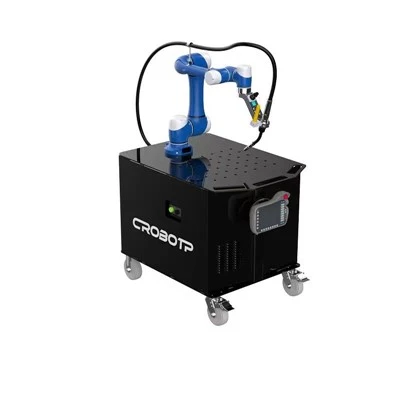
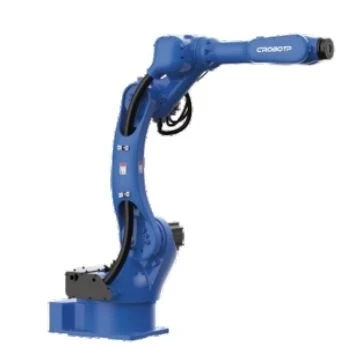
For buyers evaluating long-term support, CRP provides collaborative robot solutions and technical consultation to help customers assess application requirements and model suitability. Its product information also offers a starting point for reviewing performance specifications and discussing the technical support needed for reliable deployment.
CRP`s New Arrival


Conclusion
The service life and reliability of a collaborative robot depend on the combined effects of mechanical design, operating loads, motion profiles, environmental conditions, maintenance practices, and system integration. Procurement managers and maintenance engineers can reduce lifecycle risks by verifying application-specific performance data, establishing evidence-based maintenance procedures, and confirming safety responsibilities and technical support before deployment. Contact our technical team to discuss your payload, reach, cycle time, and operating environment and identify a collaborative robot solution suited to your application requirements.
Confirm Your Collaborative Robot Solution
FAQ
Q: How Long Does a Collaborative Robot Typically Last?
A: There is no universal service life for every collaborative robot, as actual longevity depends on operating intensity, component design, environmental conditions, maintenance quality, and the replacement of wear parts.
Q: How Can Engineers Detect Early Signs of Collaborative Robot Wear?
A: Engineers can monitor changes in positioning accuracy, vibration, temperature, alarm frequency, and cycle time, then compare these findings with manufacturer specifications and historical operating data.
Q: Does a Collaborative Robot Need Safety Guarding?
A: Safety guarding depends on the complete application`s risk assessment and the effectiveness of the selected risk-reduction measures, not simply on whether the robot has collaborative functions.