Introduction
A collaborative welding robot system typically costs $50,000–$120,000+, depending on robot specifications, welding equipment, fixtures, and integration requirements. However, the robot arm represents only part of the investment, as a production-ready system also requires a welding power source, torch, wire feeder, control system, and suitable workholding equipment. This buying guide breaks down the seven main cost components, compares configurations for different production needs, and explains how to evaluate total investment and payback before requesting a quotation.

How Much Does a Collaborative Welding Robot System Cost
A complete cobot welding system generally falls into three indicative budget levels, although the final quotation depends on the equipment package and project scope.
|
Budget Level |
Estimated Cost |
Typical Configuration |
|
Entry-Level |
$50,000–$70,000 |
Single cobot, standard MIG equipment, mobile cart |
|
Mid-Range |
$70,000–$100,000 |
Higher-reach cobot, advanced welding functions, customized fixtures |
|
Advanced |
$100,000–$120,000+ |
Positioner, customized tooling, expanded automation |
These figures are preliminary procurement benchmarks rather than fixed industry prices, and buyers should distinguish between a standalone robot arm, a packaged welding workstation, and a fully integrated production cell. Factory-direct purchasing may reduce additional distribution and integration markups, but the actual savings depend on whether installation, programming, safety equipment, and after-sales support are included in the competing quotations.
What Are the 7 Main Cost Components of a Cobot Welding System
The final purchase price depends on seven major cost categories, with robot specifications, welding processes, workpiece requirements, and integration scope determining how much each contributes to the budget.
|
Cost Component |
Indicative Budget Share |
Main Price Factors |
|
Cobot Arm |
30%–40% |
Payload, reach, repeatability |
|
Welding Power Source |
12%–18% |
Welding process, output capacity |
|
Torch & Wire Feeder |
5%–10% |
Cooling, torch protection, feeding stability |
|
Control System & Teach Pendant |
8%–12% |
Programming interface, software functions |
|
Fixtures & Positioners |
10%–20% |
Clamping, workpiece dimensions, positioning axes |
|
Customization & Electrical Cabinet |
3%–8% |
Cable length, voltage, transformer |
|
Integration, Installation & Training |
10%–20% |
Programming, commissioning, operator training |
*The percentages are indicative planning allocations, not fixed market standards; actual shares vary by configuration.
Cobot Arm: Payload, Reach & Accuracy
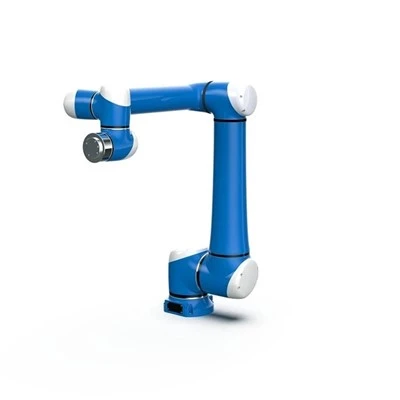
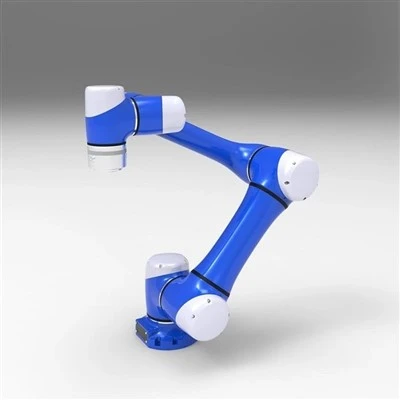
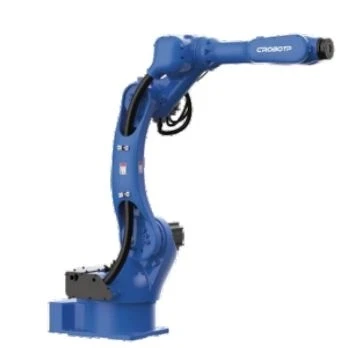
The robot arm typically represents the largest hardware expense, with models such as a 5 kg payload, 906 mm reach cobot for compact workstations and a 10 kg payload, 1,320 mm reach model for larger workpieces illustrating how payload and working radius influence selection and price.
Welding Power Source: Process & Output Capacity
MIG/MAG, TIG, CMT, and laser welding require different power sources and process configurations, so buyers should match output capacity and welding requirements to their materials and joint designs rather than paying for unnecessary capabilities.
Torch & Wire Feeder: Stable Welding Performance
Air-cooled or water-cooled torches, anti-collision protection, wire-feeding stability, and consumable compatibility affect equipment costs as well as the system's ability to maintain consistent weld quality.
Control System & Teach Pendant: Programming Functions
A 3D joystick, drag-teaching handle, and integrated functions such as arc tracking, touch sensing, weaving, and multipass welding can reduce programming effort, but buyers should confirm which functions are included and whether additional software licenses apply.
Fixtures & Positioners: Workpiece Handling
Standard fixtures may suit small, repetitive components, while large or irregular workpieces may require customized pneumatic clamps, external positioners, or coordinated robot movement, increasing the tooling and engineering budget.
Customization & Electrical Cabinet: Workshop Compatibility
Cable lengths, factory voltage, transformer capacity, and electrical cabinet requirements influence non-standard engineering costs, particularly when the robot must operate at a considerable distance from its control equipment.
Integration, Installation & Training: Production Readiness
Programming, system commissioning, operator training, overseas installation, and technical support should be included in the quotation comparison because an inexpensive hardware package may require substantial additional spending before production can begin.
Which Collaborative Welding System Configuration Fits Your Budget
The right configuration depends on workpiece dimensions, material thickness, production volume, and welding complexity rather than simply choosing the robot with the highest payload.
Entry-Level Mobile Welding Workstation
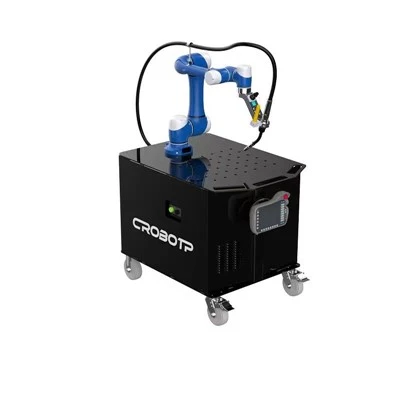
A 5 kg payload cobot with 906 mm reach, a mobile welding cart, standard MIG equipment, and handheld programming suits small job shops, high-mix low-volume production, frequent changeovers, and workshops with limited floor space.
Mid-Range Heavy-Duty Welding Workstation
A 10 kg payload cobot with 1,320 mm reach, a higher-capacity welding power source, arc tracking, and multipass welding functions suits construction machinery, tanks, shipbuilding components, and medium-to-thick steel structures.
Advanced Customized Welding Cell
A dual-robot configuration with external positioners, customized fixtures, and dedicated electrical cabinets suits large structural steel components, rail transit manufacturing, and high-volume production requiring coordinated welding operations.
4 Hidden Costs Buyers Should Check Before Ordering
Two suppliers may quote similar hardware prices but deliver very different operating costs once software, customization, quality control, and after-sales services are included.
Software Licenses & Programming Costs
Check whether arc tracking, touch sensing, weaving, multipass welding, and offline programming require additional purchases or recurring subscriptions, as these expenses can increase the long-term cost of ownership.
Customization & Non-Standard Engineering Fees
Confirm cable lengths, factory voltage, transformer capacity, electrical cabinet requirements, minimum order quantities, and whether suppliers provide 3D models and simulation videos before charging for non-standard engineering.
Accuracy, Quality Control & Downtime Risks
Request repeatability specifications, calibration records, load-testing results, and actual welding sample evaluations to assess whether the system can maintain consistent performance under your intended production conditions.
Installation, Spare Parts & After-Sales Support
Include overseas commissioning, operator training, warranty coverage, technical response times, repair arrangements, and long-term spare-parts availability in your supplier evaluation to avoid unexpected downtime after delivery.
How to Calculate the ROI of a Collaborative Welding Robot System
The financial return depends on the labor hours actually released, additional production capacity created, and reductions in rework, scrap, and operational waste.
Calculate Annual Operating Savings
Use the following formula to estimate the financial benefit of automation:

- Labor savings should include reduced overtime, shift coverage, and the opportunity to reassign skilled welders to other production tasks.
- Quality savings should account for lower rework rates, fewer rejected parts, and more consistent weld execution.
- Operating costs should include electricity, maintenance, consumables, and any additional supervision requirements.
Estimate the Payback Period
Divide the initial system investment by annual net savings to estimate how long the equipment takes to recover its purchase cost.

For example, a $90,000 system generating $75,000 in annual net savings has a simple payback period of 14.4 months, assuming savings remain consistent and the initial investment includes all relevant acquisition costs.
Procurement Checklist: What to Prepare Before Requesting a Quote
Preparing basic production and technical information helps suppliers recommend the appropriate robot configuration and provide an accurate, comparable quotation.
4 Details to Include in Your RFQ:
- Workpiece Material & Thickness: Specify carbon steel, stainless steel, or aluminum, together with the actual thickness range, such as 3–20 mm.
- Weld Geometry & Workpiece Dimensions: Provide joint types, weld positions, and maximum workpiece dimensions to determine robot reach and positioner requirements.
- Required Welding Process: Identify whether your application requires MIG/MAG, TIG, or laser welding.
- Workshop Conditions: Specify available power supply, installation space, required cable lengths, and other operating conditions.
Ask suppliers to separate robot hardware, welding equipment, tooling, customization, installation, training, warranty, and delivery costs so your purchasing team can compare equivalent packages.
When requesting a quotation from CRP, buyers can submit workpiece drawings, welding videos, and production requirements to frank.fang@crprobot.com for a configuration assessment. Its welding cobot solutions include 5 kg and 10 kg payload models, mobile deployment options, and handheld programming features, with technical support for evaluating application requirements and system configurations.
Conclusion
A collaborative welding robot system is a production investment whose actual cost depends on robot specifications, welding equipment, workholding, customization, and integration services. Buyers should evaluate complete system quotations, long-term operating expenses, and realistic productivity gains rather than selecting equipment based on the lowest initial price. Send your workpiece drawings, welding requirements, and production details to request a customized system proposal, 3D simulation evaluation where applicable, and an itemized factory-direct quotation.
FAQ
Q: How Much Does a Complete Cobot Welding System Cost?
A: A complete collaborative welding system typically requires a budget of $50,000–$120,000+, depending on its equipment package, tooling, and integration scope.
Q: What Is Included in a Collaborative Welding Robot Package?
A: A typical package includes a cobot arm, welding power source, torch, wire feeder, controller, programming interface, and basic workstation, while customized fixtures and installation may cost extra.
Q: How Long Does It Take to Recover the Investment in a Cobot Welding System?
A: The payback period depends on labor savings, production utilization, quality improvements, and operating expenses, so buyers should calculate it using actual factory data rather than relying on a standard industry estimate.