Introduction
Robotic welding for battery enclosures requires careful coordination between material properties, joint design, dimensional accuracy, and production targets. Aluminum battery trays, enclosure top covers, internal reinforcement beams, and energy storage cabinets each present different challenges in heat management, weld seam accessibility, structural integrity, and manufacturing consistency. This guide explains how manufacturers can evaluate welding processes, robot configurations, and production validation requirements for different battery enclosure components.
Why Battery Enclosures Require Application-Specific Robotic Welding
Selecting a suitable welding system starts with understanding the workpiece rather than choosing a robot based on speed or payload alone.
Material & Thickness
Aluminum sheets, extruded profiles, and steel panels require different welding parameters and heat management strategies to control distortion and achieve the specified weld quality.
Joint Fit-Up & Seam Access
Stamping tolerances, assembly gaps, long seams, and restricted access around internal structures influence torch positioning, robot reach, and the need for seam tracking.
Production & Quality Targets
Required cycle time, weld penetration, porosity limits, dimensional tolerances, structural strength, and sealing performance determine which process and inspection methods are appropriate.
Robotic Welding for Aluminum Battery Trays
Large aluminum battery trays combine extensive sheet-metal surfaces with longitudinal rails, crossmembers, and corner joints, making heat input and dimensional stability important selection criteria.

Control Heat-Induced Distortion
Evaluate laser welding or CMT-based processes according to the alloy, thickness, joint geometry, and penetration requirements to determine whether lower heat input can reduce distortion without compromising joint quality.

Maintain Consistent Weld Paths
Small line segment acceleration can help maintain smoother robot motion through short path segments and corners, while suitable seam tracking can compensate for detected workpiece deviations.

Verify Tray Quality Before Production
Test representative joints for porosity, penetration, distortion, dimensional accuracy, and leak-tightness where required before approving the welding procedure for production.
For manufacturers searching for a welding robot for aluminum battery tray applications, the most suitable configuration depends on the actual joint design and validated process results rather than the welding technology alone. A laser welding robot is worth evaluating when the joint geometry, material thickness, and required production rate are compatible with laser welding.
Robotic Welding for Battery Enclosure Top Covers
Battery enclosure top covers often contain long perimeter seams and thin stamped panels, where excessive heat, inconsistent fit-up, or incomplete welds can compromise dimensional accuracy and sealing performance.
Manage Thin-Sheet Welding Risks
Select arc welding or laser welding based on material, thickness, joint clearance, and penetration requirements to balance burn-through risk, distortion, and weld quality.
Correct Positioning Deviations
Laser seam tracking can help adjust the welding path when the system detects seam deviations within its validated operating range, reducing dependence on perfect fixture positioning.
Validate Sealing Performance
Inspect weld continuity and relevant defect criteria, then conduct the specified leak or enclosure protection tests rather than assuming that a welding process automatically achieves IP67 or IP69K performance.
A thin sheet metal welding robot for EV enclosures should be assessed as part of a complete process, including joint preparation, fixturing, sensing, and inspection. A compatible welding power source also needs to support the selected process and its required parameter control.

Welding Robots for Battery Frame Reinforcement Beams
Internal reinforcement beams, crossmembers, mounting brackets, and aluminum extruded profiles require reliable joint formation despite restricted access and changing welding positions.
Address Complex Joint Geometry
Assess robot reach, torch orientation, and fixture clearance around intersecting beams and internal brackets before finalizing the workstation layout.
Match Motion Control To The Joint
Arc swing can help manage suitable wider joints, while multi-external-axis linkage can coordinate the robot and positioner to present complex workpieces at more appropriate welding angles.
Verify Structural Weld Requirements
Establish acceptance criteria for weld size, penetration, defects, and mechanical performance according to the component drawing and applicable engineering specifications.
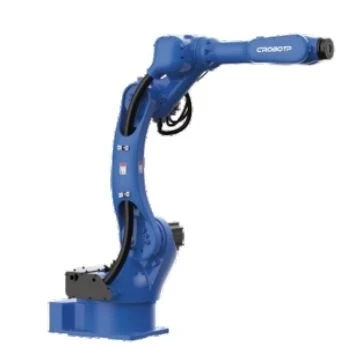
For buyers evaluating a welding robot for EV battery frame structural components, robot reach and coordinated positioning matter as much as nominal travel speed. A 6-axis welding robot may suit complex paths, but the final configuration depends on workpiece dimensions, joint accessibility, and whether external positioning axes are necessary.

Robotic Welding for Energy Storage Battery Cabinet Enclosures
Energy storage battery cabinets typically combine metal frames, sheet-metal panels, and long seams, making workstation layout and production flexibility important alongside weld quality.
- Choose A Suitable Robot Configuration: Compare industrial and collaborative welding robots according to cabinet dimensions, required reach, payload, safety arrangements, and the accessibility of each seam.
- Plan For Product Changeovers: For low-volume, high-mix production, evaluate teach-pendant programming, guided teaching, reusable welding programs, and fixture adjustments to determine how quickly different cabinet models can be switched.
- Measure Production Performance: Compare actual cycle time, changeover duration, rework, and operator involvement across representative cabinet models instead of relying solely on the robot's rated speed.
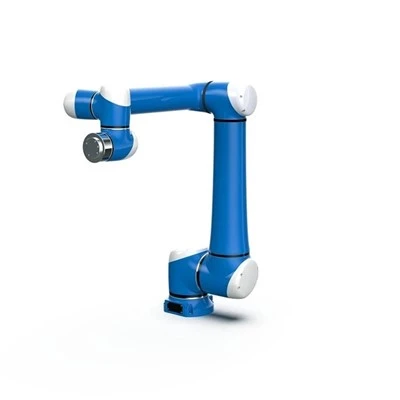
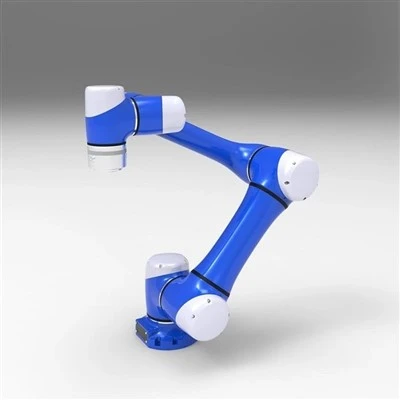
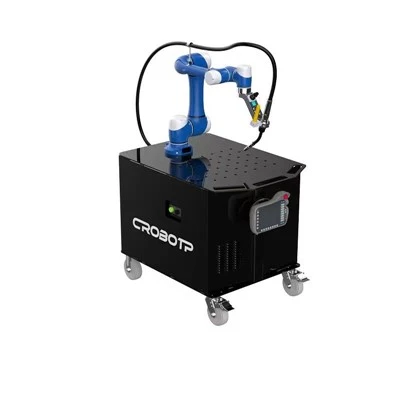
A robotic welding system for energy storage cabinet enclosures should accommodate the actual product mix and frame geometry, rather than assume that one standard cell can handle every cabinet size. Collaborative welding robots may be worth evaluating for suitable applications that prioritize flexible deployment and frequent changeovers, subject to payload, reach, process, and safety requirements.
How to Select a Battery Enclosure Welding System
A suitable system must match the component's material, joint requirements, production volume, and inspection criteria, with each factor influencing the robot, welding equipment, and peripheral configuration.
|
Evaluation Factor |
What Buyers Need To Assess |
|
Material & Thickness |
Aluminum or steel grade, thickness range, and joint configuration |
|
Joint & Seam Geometry |
Weld length, joint gaps, torch access, and required welding positions |
|
Welding Process |
Arc welding, CMT, or laser welding suitability for the specified joint |
|
Positioning & Tracking |
Fixture repeatability, workpiece tolerances, and seam deviation |
|
Workstation Configuration |
Robot reach, positioners, clamping, safety equipment, and line interfaces |
|
Production Targets |
Required cycle time, product mix, changeover frequency, and inspection standards |
Buyers should also distinguish rated robot speed from actual production cycle time, which includes loading, clamping, positioning, welding, inspection, and unloading.
Validate the Process Before Production
A controlled welding trial helps manufacturers determine whether a proposed system can meet the component's technical and production requirements before committing to full-scale deployment.
- Provide Representative Workpieces: Supply drawings and samples that reflect the production material, thickness, joint geometry, dimensional tolerances, and assembly conditions.
- Conduct Welding Trials: Test welding parameters, robot paths, sensing functions, and fixture configurations, recording the conditions and results for each representative joint.
- Verify Acceptance Criteria: Evaluate weld appearance, penetration, defects, dimensional accuracy, mechanical performance, or leak-tightness as required, and record the measured cycle time.
CRP's welding solutions cover thin-sheet and medium-thick-plate applications, with functions including laser seam tracking, small line segment acceleration, arc swing, and multi-external-axis linkage. Its portfolio also includes laser and collaborative welding robots, providing configurations that buyers can evaluate against battery enclosure workpieces and defined acceptance criteria.

Conclusion
Robotic welding for battery enclosures requires a process and workstation configuration tailored to each component, from aluminum battery trays and thin-sheet covers to structural reinforcements and energy storage cabinets. Material properties, joint geometry, positioning accuracy, production targets, and validated quality requirements should guide the final equipment selection. Contact the supplier with your workpiece drawings, material and thickness specifications, weld requirements, target output, and production line details to discuss a suitable robotic welding solution.
Find Your Robotic Welding Solution
FAQ
Q: Which Workpiece Data Should I Provide for a Battery Enclosure Welding Quote?
A: Provide component drawings, material grades, thicknesses, joint details, dimensional tolerances, expected production volume, and weld acceptance criteria.
Q: Can One Robotic Welding System Handle Different Battery Enclosure Models?
A: A single system may accommodate multiple models if its robot reach, fixtures, welding programs, positioning capabilities, and changeover arrangements suit the full product range.
Q: How Should Battery Enclosure Welds Be Designed for Automated Production?
A: Battery enclosure welds should be designed with consistent joint geometry, accessible torch angles, controlled fit-up tolerances, and clearly defined inspection criteria to support repeatable robotic welding and reduce rework.