

Introduction
Modern manufacturers are using robotic welding to improve consistency, efficiency, and production control across demanding welding tasks. As robotic welding in manufacturing becomes more common, welding automation helps factories standardize processes, reduce workflow variation, and build more flexible production lines.
What Robotic Welding Means in Modern Manufacturing
Robotic welding is an automated welding process that uses a welding robot arm, control system, welding power source, fixture, and a programmed path to perform repeatable welding tasks. In modern manufacturing, it is not only a machine replacement for manual welding. It is a more controlled production method that integrates welding parameters, robot movement, part positioning, and batch workflow into a single, organized system. For factories producing metal components, automotive parts, machinery frames, or stainless steel structures, an industrial welding robot can help make welding output more stable and easier to manage at scale.
How Welding Automation Changes the Production Workflow
Welding automation changes the production workflow by turning welding from a highly operator-dependent process into a more programmable and repeatable operation. After the workpiece, fixture, welding path, and process parameters are confirmed, the welding robot system can repeat the same movement and welding rhythm across similar parts. This helps manufacturers coordinate part loading, fixture positioning, robotic welding, inspection, and the next production step more efficiently, creating a smoother workflow for batch production and long-term manufacturing planning.
Key Benefits of Robotic Welding for Manufacturers
For manufacturers, robotic welding supports a more stable and manageable production process. When welding paths, parameters, fixtures, and robot movements are properly matched, welding automation can help factories improve output consistency, organize production rhythm, and support long-term manufacturing efficiency.
- More Consistent Weld Quality: Robotic welding follows programmed paths, speeds, and welding parameters. This helps manufacturers reduce process variation and achieve more consistent weld results across repeated parts.
- More Predictable Production Rhythm: Welding automation supports a steadier production cycle. Once the process is set, the welding robot can repeat the same operation efficiently for batch production and multi-shift manufacturing.
- Better Use of Skilled Labor: Repetitive welding tasks can be handled by the robot, while skilled workers focus more on programming, fixture adjustment, process optimization, and quality control.
- Easier Integration With Manufacturing Lines: A welding robot system can work with fixtures, positioners, handling robots, and inspection steps. This makes it easier to build a more connected automated welding cell.
- Greater Flexibility for Different Welding Tasks: Different welding robot solutions can support arc welding, spot welding, laser welding, TIG welding, and collaborative welding applications. This helps manufacturers match automation with different product structures and production needs.
Where Robotic Welding Is Used in Manufacturing
Robotic welding in manufacturing is widely used in industries where weld consistency, production rhythm, and repeatable process control are important. Different welding tasks may require different robot types, but the main goal is usually the same: to make welding output more stable, efficient, and easier to manage.
|
Manufacturing Area |
Robotic Welding Value |
Suitable Robot Type |
|
Automotive Parts |
Stable Weld Points & Repeatable Output |
Spot Welding Robot |
|
Metal Fabrication |
Consistent Seams & Flexible Programming |
Arc Welding Robot |
|
Stainless Steel Components |
Clean Weld Appearance & Process Control |
TIG / Laser Welding Robot |
|
Construction Machinery |
Heavy Structure Welding & Stable Operation |
Industrial Welding Robot |
|
Pipe & Frame Welding |
Path Accuracy & Fixture Coordination |
Pipe Welding Robot |
|
High-Mix Workshops |
Easier Teaching & Flexible Deployment |
Collaborative Welding Robot |
What Buyers Should Confirm Before Adopting Welding Automation
Before adopting welding automation, buyers should connect the robot solution with real production conditions. A suitable system should match the welding process, workpiece structure, production rhythm, operator capability, and long-term service expectations.
- Welding Process and & Type: Buyers should first confirm whether the application requires arc welding, spot welding, laser welding, TIG welding, or another process. Material type, thickness, joint design, and weld appearance requirements will affect robot selection and system configuration.
- Production Volume & Part Consistency: Robotic welding is especially useful for repeated welding tasks and batch production. Buyers should review daily output, part similarity, product change frequency, and expected production rhythm before planning the automation layout.
- Robot Reach & Workstation Layout: The welding robot arm should match the workpiece size, fixture position, and welding path. Proper reach and workstation planning help the robot cover key welding areas while keeping the cell organized and efficient.
- Programming & Operator Readiness: Welding automation also requires programming, parameter adjustment, and daily operation knowledge. Buyers should confirm whether their team needs training support, offline programming guidance, or on-site commissioning assistance.
- After-Sales & Long-Term Support: A welding robot system should be supported by spare parts, maintenance guidance, technical service, and responsive communication. This helps manufacturers keep robotic welding stable after the system enters daily production.
What to Look for in a Robotic Welding Manufacturer
A robotic welding manufacturer should provide more than standard robot models. Buyers need a partner that understands welding processes, robot configuration, production layout, and after-sales service. An experienced robotic welding manufacturer, such as CRP, should help buyers match the welding process, robot model, workstation layout, control system, and service plan with real production requirements.
- Robot Portfolio and System Matching: The manufacturer should offer suitable welding robot options for different tasks, such as arc welding, spot welding, TIG welding, laser welding, and collaborative welding. This helps buyers avoid selecting a robot that does not match their production scope.
- Control System and Core Component Capability: Stable robot movement depends on coordinated control, servo performance, and system integration. A manufacturer with strong control system capability can better support accurate path movement and repeatable welding output.
- Welding Application Experience: Robotic welding in manufacturing requires practical process knowledge. The manufacturer should understand workpiece materials, welding positions, fixtures, shielding requirements, and production rhythm, rather than only providing a robot arm.
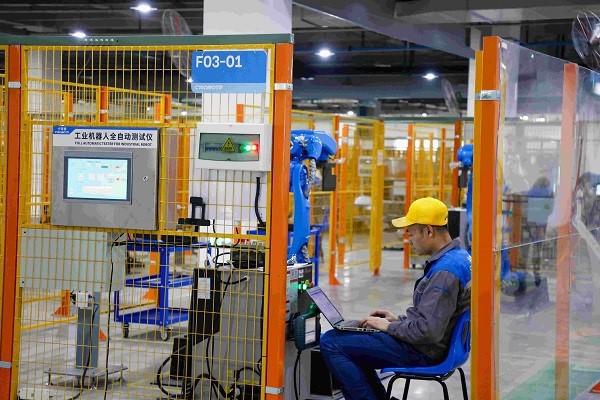
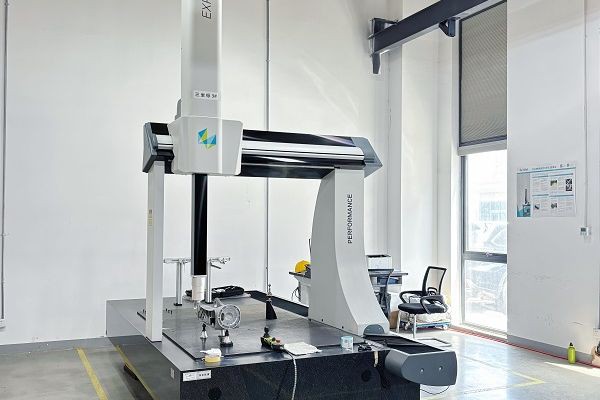
- Factory Testing and Quality Control: Buyers should review whether the manufacturer has clear assembly, inspection, testing, and shipment procedures. Pre-delivery testing helps confirm robot motion, system coordination, and basic application readiness.
- Training, Spare Parts, and Local Support: Long-term operation depends on accessible technical support. Training, spare parts supply, maintenance guidance, and localized service help distributors, integrators, and factories keep welding automation running smoothly.

Conclusion
Robotic welding is transforming modern manufacturing by making welding processes more consistent, programmable, and easier to integrate into production workflows. Buyers should evaluate welding process requirements, part consistency, workstation layout, operator readiness, and manufacturer support before adopting welding automation. Contact us to explore a robotic welding solution that fits your production workflow and automation plan.


