

Introduction

Robotic welder is no longer a "nice to have", but a reliable way to improve your throughput and stay competitive when skilled welders are increasingly hard to find. But, if this is your first purchase, you're probably asking yourself a bunch of questions: Will the robot fit my workflow? Will it really improve weld quality? How different is the learning for programming?
You're not alone, cause first-time buyers often feel overwhelmed. So in this guide, we're going to walk you through the things to consider in a way that's easy to digest to help you make the right decision. Let's get started!
Production Output Requirements
Before looking at any detailed specs, think about your output. Robot selection changes depending on your cycle time goals, shift lengths, and takt time pressure. A well-matched robot should keep pace with your production.
If you run small batches of multiple product types, a flexible single-station robot is often better than a high-speed system. But for large volumes continuously, such as automotive parts or metal furniture, you'll likely need dual stations, positioners, or automated loading systems.

Material Type & Weld Requirements
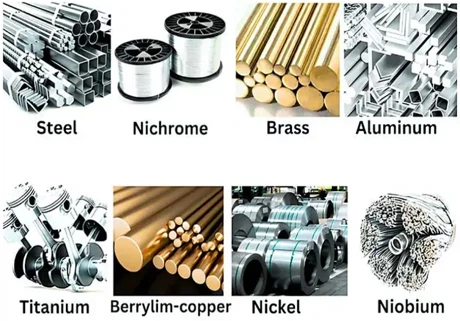
Different metals behave differently under heat, and the expectations for weld appearance vary, such as:
• Carbon Steel: Easy to work with, allowing higher travel speeds and hotter welds.
• Stainless Steel: Demands control and a gentle thermal profile for clean, consistent seams.
• Aluminum: Sensitive to heat, often requiring pulse welding to avoid warping.
The material thickness matters too. Thicker parts require more heat and a robot that can keep the torch steady enough to achieve proper penetration.
Welding Process Selection
Most metal fabrication still revolves around arc welding because it's versatile and strong. But within that, different processes shine in different areas:
• TIG Welding: Tig welding delivers clean, precise welds on thin or precise parts. It's slower but best for high-quality seams.
• MIG/MAG Welding: Reliable, efficient, suitable for a wide range of materials. They're commonly used for steel.
• Pulse MIG / Double Pulse Welding: Ideal for aluminum or high-appearance requirements.
• Spot Welding: Often used for structural or automotive sheet assemblies.
If you're unsure, start by looking at your workpieces and quality standards, then let your welding robot supplier advise you on the process that fits best.

Robot Specifications
Robot data sheets can be overwhelming, but a few specs genuinely make or break your setup. Consider:
• Reach: It determines whether the robot can access all weld joints without repositioning.
• Payload: Can the robot carry your torch and cables comfortably?
• Accuracy: Affects the bead quality, especially on thin materials or multi-pass welds.
Choose a welding robot that can handle your most complex parts, not just the easiest ones.

Welding Power Source Compatibility
You could have the fanciest robot in the world, but if it doesn't fit your existing power source, whether OTC, Fronius, or Kemppi, inconsistent penetration or extra spatter happens.
Make sure your system supports the processes you need, and that parameters sync in real time. When the robot and power source work together, you get stable arcs, smoother wire feeding, cleaner starts and stops, and easier parameter control.

Fixture, Positioner & Layout
Think about your workflow: does the part need flipping mid-weld? Do welds require specific angles for optimal quality? Will a dual-station setup speed up production? In many cases, investing in a good fixture or a two-axis positioner improves quality more than upgrading to a higher-end robot.
Besides, we suggest you plan the welding torch operation, safety area, and loading efficiency reasonably, and reserve some expansion space.

Programming
Look for intuitive interfaces, graphical programming tools, and preset weld templates. Offline programming support is a bonus, which lets you tweak programs without stopping production. Of course, the best way is to choose a system matched to your operator skill level, so they can be able to learn the basics in several days.

Welding Quality & Consistency
When evaluating a robot, seek one with a stable bead shape, consistent penetration, minimal spatter, smooth trajectory, and reliability over long shifts. These could be carried out through sample welds, trial runs, and reproducibility tests, to judge how it will work in your factory.

Welding Robot Cost
Don't just look at the purchase price. True cost includes:
• Fixtures, positioners, and power sources
• Installation and commissioning
• Maintenance and consumables
• Downtime, rework, and energy usage
You may find the biggest savings come from less rework and reduced reliance on skilled welders, not the sticker price of the robot.

Service & After-Sales Support
Choose a supplier that can deliver spare parts, respond quickly, and guide you through technical issues. This directly reduces future downtime.
If you're buying your first welding robot, make sure it offers training. A professional team will help your operators get comfortable with the new system faster, so your line can start producing smoothly.

Conclusion
Buying a welding robot isn't as complicated as it looks. Just stay focused on the factors above the text, such as your output targets, materials, and the welding processes you need, and you can find the right one. If anything is still unclear, our team can walk you through the selection.
Ready to Build Your Smarter Welding Line?
As a leading industrial robot manufacturer, CRP provides comprehensive robotics solutions, covering welding, painting, material handling, palletizing, and more. If you're planning a new workstation or upgrading an existing line, our engineers can assist you in mapping out a tailored workstation layout. Get in touch with us to discuss your project.


